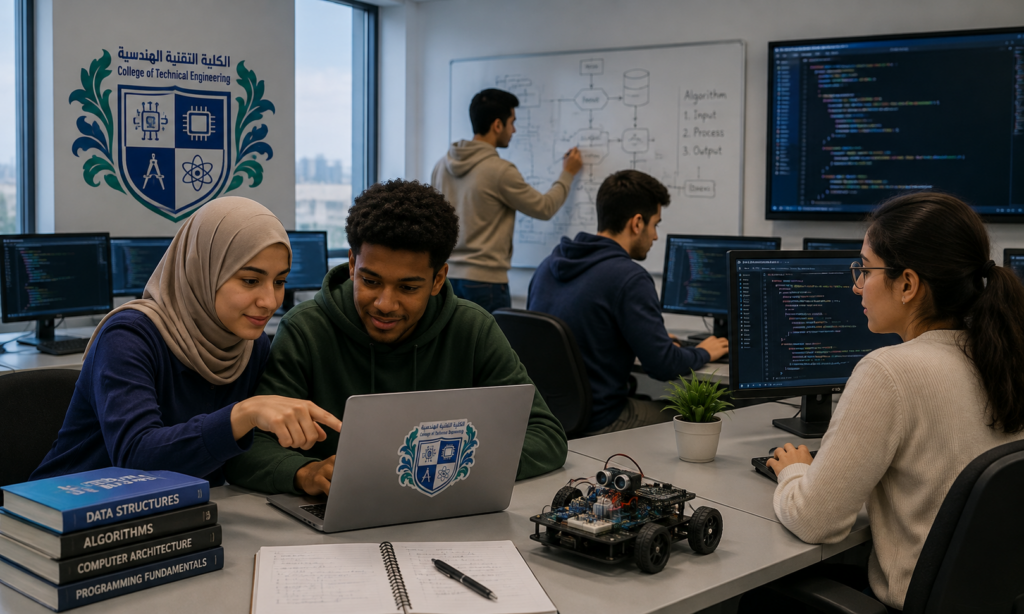
Computer techniques engineering sits at the meeting point of hardware and software — the systems where a program has to run on a specific piece of physical equipment, reliably and within real constraints.
The programme covers digital design, embedded systems, networking and programming, with laboratory work throughout so that graduates can build, configure and troubleshoot real systems rather than only describe them.
Direction & Purpose
Vision & Mission
🔭
Vision
To be a leading department in computer techniques engineering — producing graduates who build, integrate and maintain the hardware and software systems on which Iraq's digital transformation depends.
Excellence
Innovation
Quality
Professional Responsibility
🎯
Mission
To prepare qualified computer engineers through an accredited programme spanning computer architecture, embedded systems, networks and digital design, delivered with continuous laboratory practice and supported by partnerships across the technology sector.
Strategic Direction
Objectives & Goals
🎓 Academic Objectives
Deliver an accredited computer engineering curriculum aligned with national and international academic standards.
Ensure graduates can build, configure and troubleshoot real hardware and software systems, not only describe them.
🤝 Community & Partnership Objectives
Build partnerships with technology companies, network operators and industrial automation employers.
Contribute technical expertise to digital transformation projects in the public and private sectors.
🔬 Research Objectives
Promote applied research in intelligent systems and advanced computing.
Develop laboratories in embedded systems, networking and digital design that reflect current industry equipment.
🏅 Quality & Development Objectives
Support digital transformation in teaching through virtual laboratories and e-learning platforms.
Review curricula continuously against the pace of change in computing technology.
👤
[Head of Department Name]
Head of the Department
From the Department Head
A Message from the Head of Department
Computer techniques engineering is defined by the point where software meets physical hardware — where a program has to run reliably on a specific device, within real constraints of memory, timing and power.
Our programme keeps students close to that boundary. Laboratory work runs alongside theory throughout, covering microcontrollers, networks and digital design, so that graduates can build and debug systems rather than only reason about them.
Iraq's demand for capable computing professionals continues to grow across industry, government and services. This department exists to meet it.
Academic Focus
Research & Specialisations
🔧
Computer Architecture
Processor organisation, memory systems, interfacing, and how hardware choices shape performance.
📟
Embedded Systems
Microcontrollers, real-time operation, and the firmware that drives dedicated hardware.
🌐
Computer Networks
Network design, protocols, configuration and troubleshooting across wired and wireless infrastructure.
💾
Digital Design
Logic design, FPGAs, and the tools used to specify and verify digital hardware.
⌨️
Software & Programming
Programming fundamentals, data structures, and software practice as applied to systems work.
🤖
Applied Computing
Practical applications including automation, data acquisition, and intelligent systems.
Graduate Outcomes
Career Paths
Graduates of the Computer Techniques Engineering programme work across Iraq's expanding technology sector, in roles where hardware and software have to be made to work together reliably.